
Acid Mist Scrubber Exhaust Fan Material Selection for Corrosive Gas Treatment
Acid mist scrubber exhaust fan material selection affects corrosion resistance, fan life, maintenance cost, and plant safety. In acid mist treatment, VOC pretreatment, chemical exhaust, plating workshop ventilation, battery plant exhaust, and wet scrubber systems, the fan material should be selected based on gas composition, concentration, temperature, humidity, dust, and installation position.
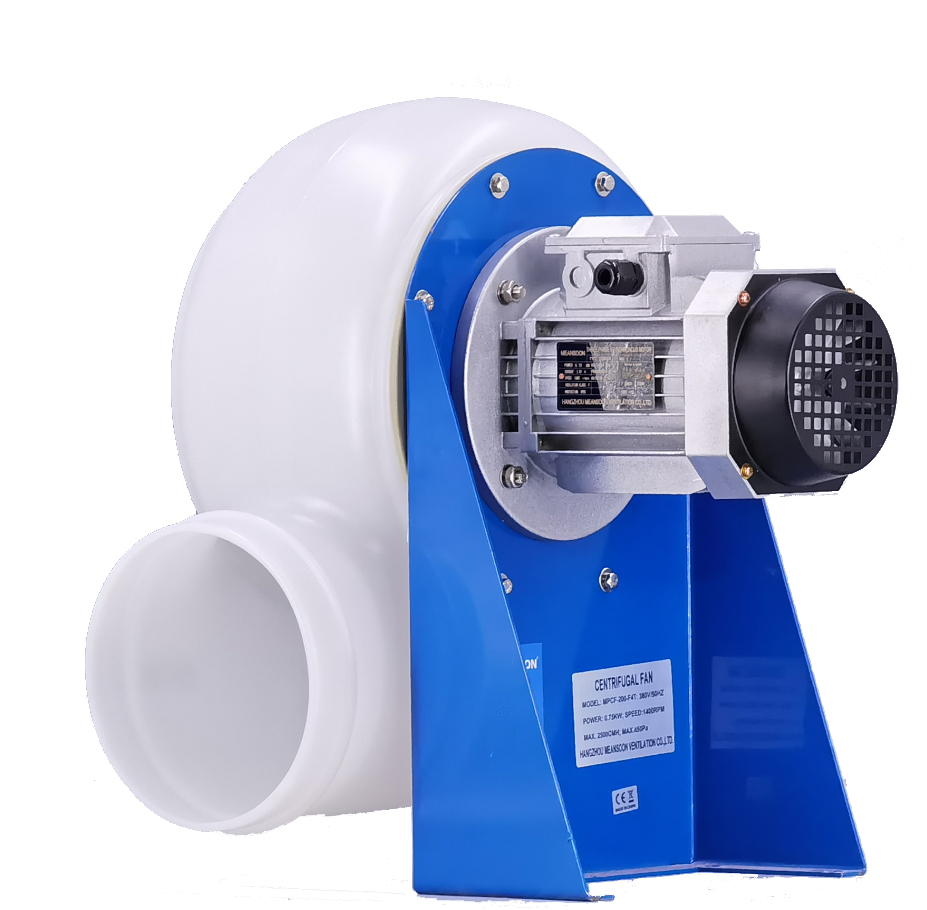
A normal carbon steel centrifugal fan may not be suitable for corrosive gas. Depending on the process, the fan may require FRP, stainless steel, anti-corrosion coating, special fasteners, sealed shaft structure, drain design, or external motor arrangement.
Typical Applications
- Acid mist scrubber exhaust systems
- Wet scrubber induced draft fan
- Plating and pickling workshop exhaust
- Chemical plant corrosive gas ventilation
- Battery manufacturing exhaust treatment
- VOC pretreatment with humidity or chemical vapor
Material Selection Factors
| Factor | Selection Impact |
|---|---|
| Gas composition | Different acids, alkali vapor, solvents, and mixed gases require different materials. |
| Chemical concentration | Higher concentration may require FRP, stainless steel, or stronger coating systems. |
| Temperature | Material strength, coating life, and FRP resin choice depend on operating temperature. |
| Humidity and droplets | Wet gas increases corrosion risk and may require drain and anti-condensation design. |
| Dust or particles | Abrasive particles may damage coating or FRP surfaces and require wear review. |
| Fan position | Before or after the scrubber changes corrosion, moisture, and dust exposure. |
| Maintenance access | Inspection door, drain port, and removable connections help long-term service. |
Common Material Options
- FRP fan: often used for strong corrosive acid mist and wet gas when temperature is within resin limits.
- Stainless steel fan: suitable for selected corrosive gases, higher mechanical strength, and specific temperature conditions.
- Coated carbon steel fan: may be used for mild corrosive exhaust when coating compatibility is confirmed.
- Special sealing or shaft protection: considered when gas leakage, moisture, or chemical attack around the shaft is a concern.
Common Selection Mistakes
- Selecting only by airflow and pressure while ignoring chemical composition
- Using carbon steel where acid mist requires FRP or stainless steel
- Ignoring operating temperature and resin or coating limits
- Installing the fan where droplets collect without a drain plan
- Ignoring vibration, impeller balance, and inspection access after corrosion starts
Inquiry Checklist
- Airflow and total pressure
- Gas composition, chemical concentration, temperature, and humidity
- Dust or particle content
- Fan position before or after scrubber
- Required material: FRP, stainless steel, coated carbon steel, or special alloy
- Motor voltage, frequency, explosion-proof requirement, and installation layout
Related Reading
- Scrubber Exhaust Fan for VOC and Acid Mist Treatment Systems
- Industrial Centrifugal Fan Selection for Wet Scrubber Exhaust Systems
- Dust Collection Fan Static Pressure Calculation for Baghouse and Duct Systems
FAQ
Is FRP always better than stainless steel for acid mist?
No. FRP, stainless steel, and coating systems should be selected according to gas composition, concentration, temperature, humidity, and mechanical requirements.
Should the fan be installed before or after the scrubber?
Both arrangements are possible. The position changes exposure to dust, droplets, corrosion, and pressure loss, so material and structure should be reviewed with the full process layout.
What data is needed for material selection?
Please provide airflow, pressure, gas composition, chemical concentration, temperature, humidity, dust content, scrubber layout, fan position, and motor requirements.
