
Heavy Duty Process Fan for Cement Plant Kiln and Cooler Exhaust
A heavy duty process fan for cement plants must handle large airflow, high pressure, dust loading, temperature variation, and continuous operation. Cement kiln exhaust, cooler exhaust, raw mill ventilation, and dust collection systems all require fan selection based on process data rather than only motor power.
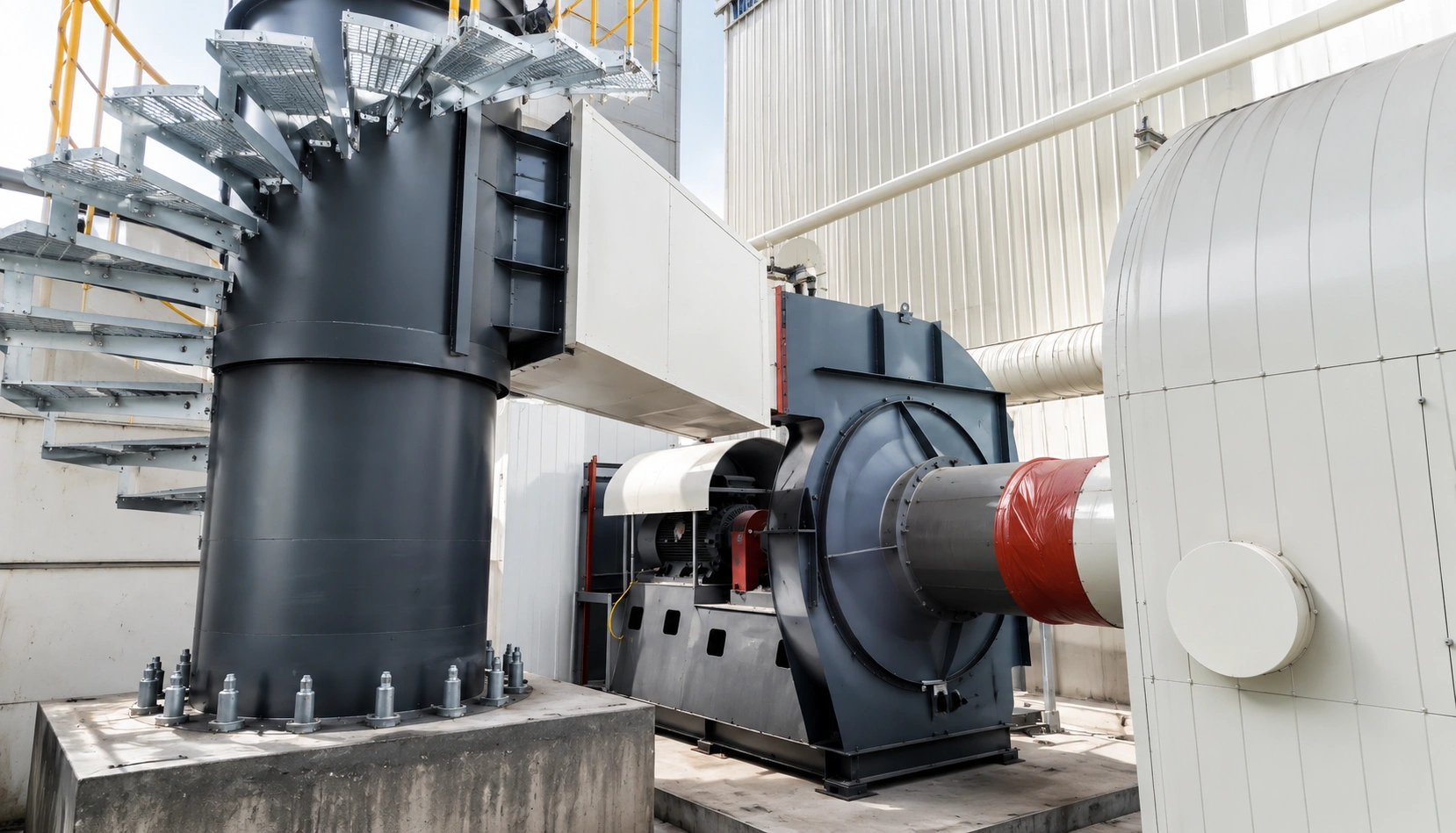
For project-type orders, this fan category helps demonstrate manufacturing capability, welding quality, impeller balancing, material selection, and heavy-duty customization.
Typical Applications
- Cement kiln exhaust fan systems
- Clinker cooler exhaust
- Raw mill and coal mill ventilation
- Baghouse and ESP induced draft systems
- High temperature dusty gas handling
- Heavy-duty process ventilation
Selection Parameters
- Required airflow and pressure at operating temperature
- Gas temperature, density, and dust concentration
- Dust abrasiveness and particle size
- System resistance through ducts, filters, dampers, and stack
- Wear-resistant material or hardfacing requirement
- Drive type: coupling, belt, or direct drive
- Motor voltage, frequency, insulation class, and protection grade
- Foundation, inlet box, damper, and maintenance layout
Reliability Notes
Cement plant fans often operate continuously. Impeller wear, bearing temperature, vibration, dynamic balance, expansion joint layout, and maintenance access should be reviewed before manufacturing. Wear protection should match actual dust load and process condition.
Related Reading
- Heavy Duty Centrifugal Fan for Cement Kiln and Raw Mill
- Baghouse Dust Collector Fan for Cement and Mineral Processing
- High Pressure Centrifugal Fan for Boiler and Furnace Draft
FAQ
What makes a cement plant process fan different from a general fan?
It usually requires heavier construction, wear resistance, higher reliability, process-specific pressure selection, and strict vibration control.
Is wear-resistant treatment always required?
Not always. It depends on dust concentration, particle size, abrasiveness, temperature, and expected service life.
What data is needed for quotation?
Please send airflow, pressure, temperature, dust concentration, gas composition, motor voltage, frequency, drive preference, and installation drawing if available.
